How to Read Your Bible More in 2026

If you’ve been around this community for a while, you know I’ve struggled with understanding my Bible and learning how to read it consistently.
I knew I should be reading Scripture, but every time I opened my Bible, I felt overwhelmed and confused. That confusion quickly spiraled into resistance, then guilt, and eventually shame.
Why couldn’t I figure this out when everyone around me seemed to have it together?
What I didn’t realize at the time was how common this struggle actually is. Only about 25% of professing Christians read their Bible more than once a week.
As I became more involved at church—serving, joining small groups, and talking honestly with other women—I realized I wasn’t alone. Maybe you’ve felt this way too.
So first, I want you to hear this clearly: you are not alone.
And second: reading your Bible consistently does not have to feel overwhelming.
Here are 10 tips to help make reading your Bible in 2026 a realistic, grace-filled rhythm—not another source of pressure.

1. Let Go of Pressure
One of my biggest struggles as a new Christian was believing my Bible reading should look a certain way or follow a specific formula.
I felt like I was failing if I didn’t complete my “perfect” routine every single day. And when I missed a day—or several—I spiraled.
Over time, I had to learn how to let go of the pressure of the shoulds.
Bible reading isn’t about performance. It’s about learning who God is, engaging with the living Word of the Creator of the universe, and spending time with Him so His truth can encourage and shape you.
That—not checking a box on a to-do list—is the goal.
My former type-A self wrestled with this for a long time. If that sounds like you, know this: it doesn’t have to be that way.
Give yourself permission to start where you are and to do what works for your season of life.
2. Create a Realistic Plan
Think about what you can actually do—not what you wish you could do.
Often, in our zeal for the Lord and His Word, we bite off more than we can chew. I did this early on when I committed to reading the Bible in a year as a brand-new Christian.
That plan overwhelmed me. I couldn’t keep up, I didn’t understand what I was reading, and I walked away feeling like I was failing.
It was simply too much, too soon.
Eventually, I stopped trying to overhaul my entire life and instead added Bible reading in where it realistically fit. That shift made all the difference.
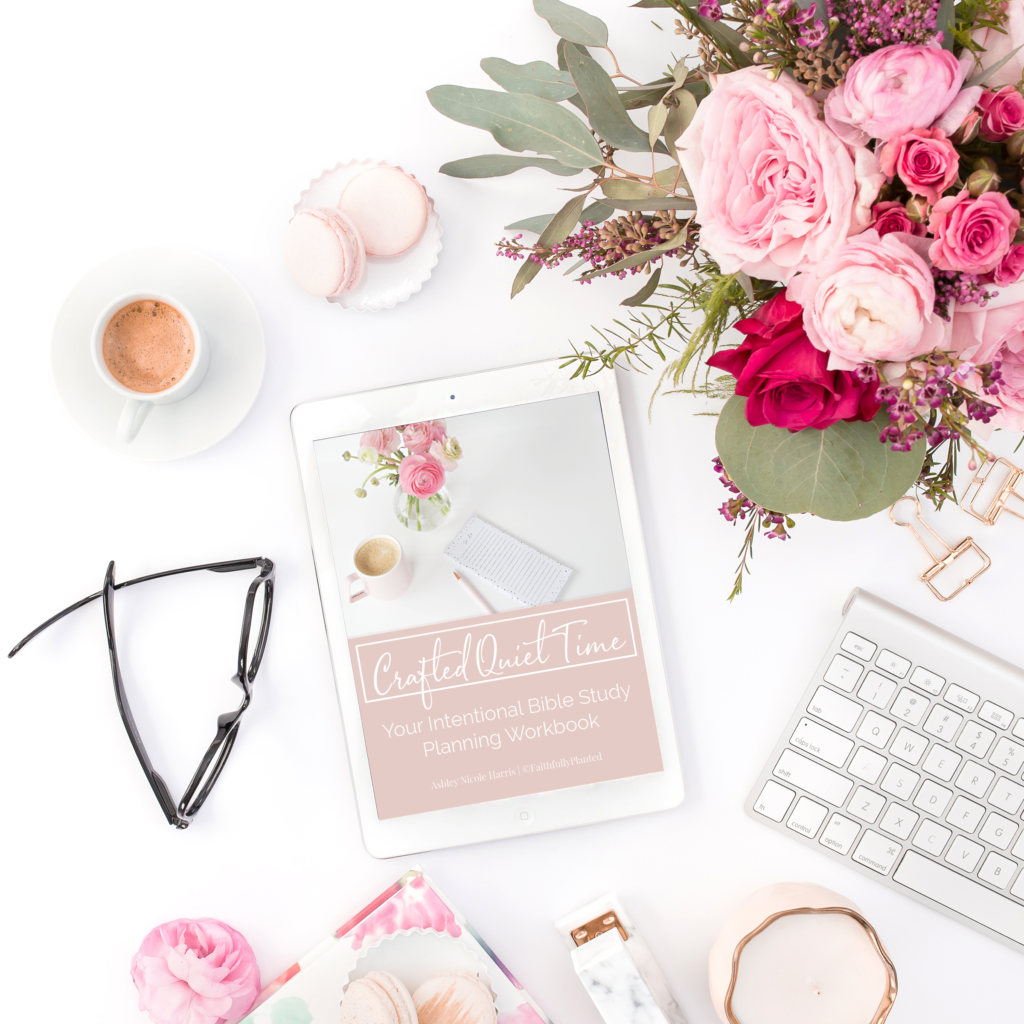
That’s why I created a step-by-step guide to help you build a Bible study plan that works for your real life. No shame. No guilt. Just practical steps toward a quiet time you actually look forward to.
Use code QUIETTIME to get yours for only $9!
3. Eliminate Distractions
Once you’ve chosen a dedicated time and place to read your Bible, set yourself up for success by minimizing distractions.
That might look like:
- Leaving your phone in another room
- Setting up a simple activity or coloring page for your kids
- Going into a quiet room alone
- Playing worship music softly to create a Christ-focused environment (instrumental works best if lyrics are distracting)
- Journaling as you read if you need something physical to engage your hands
The goal isn’t perfection—it’s creating enough space to actually be present with God.

4. Explore a New Method
Sometimes we need something fresh to reignite our excitement about opening Scripture.
Learning new Bible study methods isn’t just helpful spiritually—it’s also beneficial for your brain. Trying new approaches increases engagement and helps you retain what you’re learning.
Have you ever wanted to study themes in the Bible for yourself? Or dig into the meaning of specific words?
Learning how to study Scripture—not just read it—can be incredibly empowering. Discovering truth for yourself is sweet, confidence-building, and deeply motivating.
If you want to explore different ways to study God’s Word, I break them down in this post:
8 Bible Study Methods That Will Change Your Quiet Time
5. Use Guided Templates and Resources
If you’re new to studying Scripture, you don’t have to figure it all out on your own. We all need guidance when learning something new.
One of the reasons I stayed stuck for so long was opening my Bible and thinking, Okay… now what? I didn’t know what questions to ask or how to move beyond just reading words on a page.
Worksheets, prompts, and study guides can act as a simple roadmap. They take the pressure off and gently guide you through observing Scripture, reflecting on its meaning, and applying it to your life.
That’s exactly why I created the Bible study journals, templates, and guided resources in my shop. They’re designed for real women with real lives who want to slow down, understand Scripture, and build a consistent quiet time—without feeling overwhelmed.
Whether you need a simple SOAP template, a guided journal, or a themed study to help you focus on one topic at a time, these tools are here to support you.
You don’t get extra credit for doing Bible study the “hard way.” If a resource helps you show up, stay consistent, and understand God’s Word more clearly, that’s a win.
6. Reflect and Apply
If you are only reading your Bible, your quiet time can start to feel thin.
When we open God’s Word, we need to take time to reflect and let God speak to us about what we are reading.
You can do this by:
- Journaling
- Bible journaling
- Verse mapping
- Using the inductive Bible study method
- Using a guided Bible study journal
- Praying what you are reading back to God
Take a moment to pause and ask, “How does this change how I live my life today?” Journaling, prayer, or quiet thought helps the words stick and makes your study more than just reading.
7. Track Your Progress
Celebrate the wins—even the small ones.
Did you read your Bible five mornings this week? Celebrate.
Did you open Scripture before checking your phone? Celebrate.
Did you finally finish a study you’ve been working on? Celebrate.
Not out of pride or obligation, but because growth is happening.
Tracking what you’ve read, noting insights, or checking off milestones reminds you that showing up matters—and that God is at work.
8. Make It Creative
Bible study doesn’t have to be just reading.
Personally, if I only read, close my Bible, and move on, I struggle to retain what I’ve learned. My brain needs more engagement for Scripture to really stick.
That’s why I created the Bible Study Templates Bundle—with tools like verse mapping and inductive study templates—to help you engage Scripture creatively and thoughtfully.

9. Embrace Community
One of the best ways to grow in your Bible reading is to do it with others.
Study with a friend, join a small group, or get involved in your church’s women’s Bible study. If your church offers women’s ministry events—go.
Yes, it might feel uncomfortable at first. Do it anyway.
Community brings clarity, encouragement, accountability, and perspective that we can’t get on our own.
10. Stay Flexible
Life happens, and that’s okay. I am here to give you permission to change, adapt, and give yourself grace in hard seasons.
Reading your Bible more in 2026 may mean you need to get creative.
- Maybe that looks like listening to Scripture on audio instead of tackling a deep study.
- Maybe it’s one chapter while you eat breakfast. (This is me right now—I see you.)
- Maybe you have more capacity and it’s time to go deeper.
- Maybe your season has shifted and you finally have quiet mornings again.
Skipping a day, changing your plan, or slowing down doesn’t mean failure. It means your Bible reading is realistic, grace-filled, and sustainable.
RELATED: 10 Ways to Read Your Bible Every Day
A Final Encouragement
If you take nothing else away from this post, let it be this: God is not measuring your faith by how perfectly you read your Bible.
He is inviting you into a relationship.
Reading your Bible isn’t about keeping up, checking boxes, or comparing yourself to someone else’s quiet time. It’s about meeting with the Lord in the middle of your real life—right where you are.
Some seasons will feel rich and focused. Others will feel scattered and small. Both count.
If you’ve struggled with consistency, understanding Scripture, or knowing where to start, I hope these tips remind you that growth happens one step at a time. Grace always comes first.
Choose one small change. Try one new method. Give yourself permission to build a rhythm that fits your season—not someone else’s.
And if you need support along the way, whether through guided Bible study resources, creative templates, or encouragement from this community, know that you don’t have to do this alone.
The goal isn’t perfection.
The goal is presence.
Open your Bible. Sit with the Lord. Let Him meet you there.
Cheering you on,